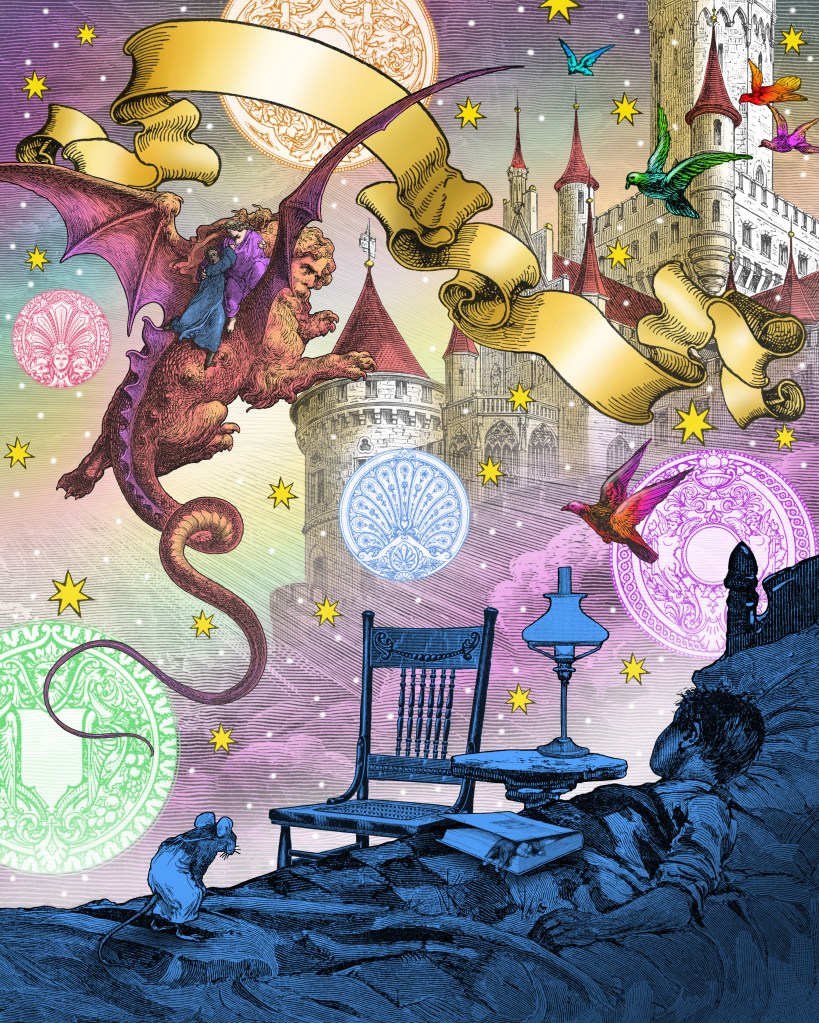
The art of collage has fascinated me for many years. I created my first serious collage project back in 1999 with the Dream-Dollars project. I used old Victorian engravings and compiled them together in Photoshop, often making huge compositions with dozens of layers and elements. This was a technique I continued for decades, right up to 2022. In fact, one of my most popular books, Willoughby’s World of Wonder, contains a large amount of collage artworks depicting the many strange and wonderful creatures in the Field Guide.
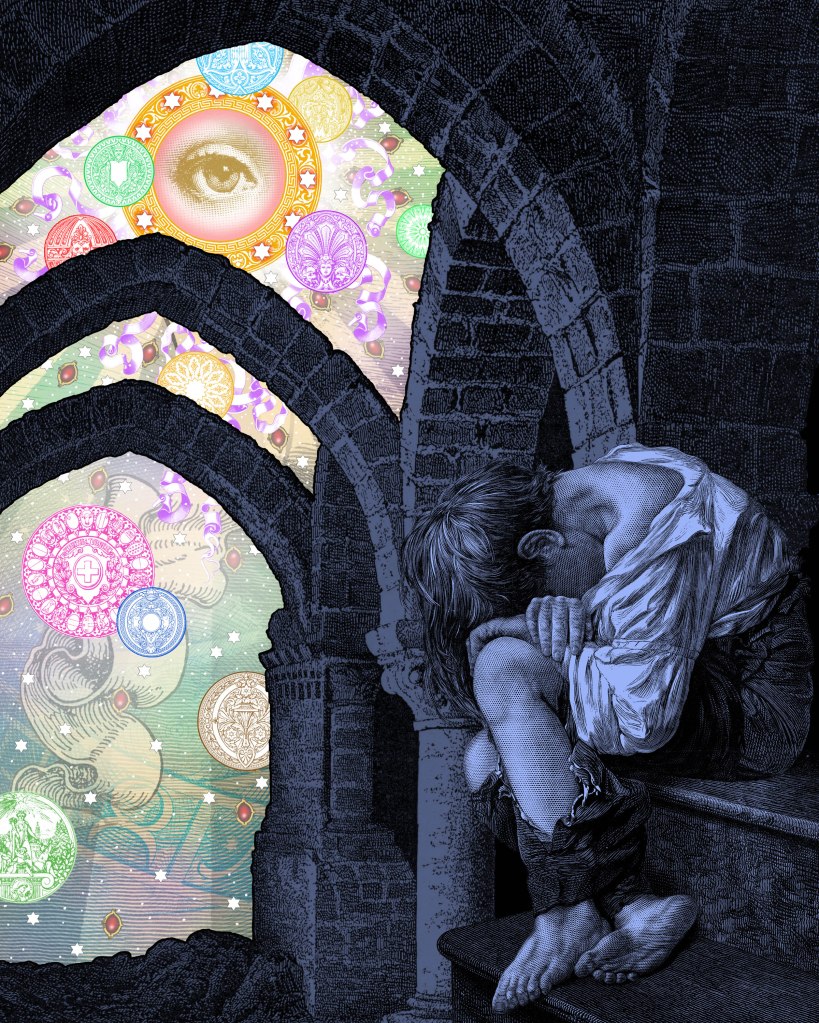
I really liked the look of old engravings, and I developed a technique where the final collage didn’t look like a collage, it looked like it was a seamless image — and that is very hard to do! First off, the engraving styles had to match in all of the elements. Plus the direction of light had to be the same, and the sizes had to be close. If I had to shrink an element down in size by a large degree, it wouldn’t work because the line weights would be too different. So, it was technically very difficult, and I had a LOT of search time just to find the right elements in my collection of hundreds of vintage books!
I do love this style, though. I have been an illustrator for many years, and I can draw just fine, but the art of collage still fascinates me. Maybe it’s the speed at which I can work. Perhaps it’s the fun of unexpected juxtapositions — the elements of surprise and serendipity. Maybe it’s the flexibility to move elements around until the composition is perfect. Maybe I just get bored too easily…..
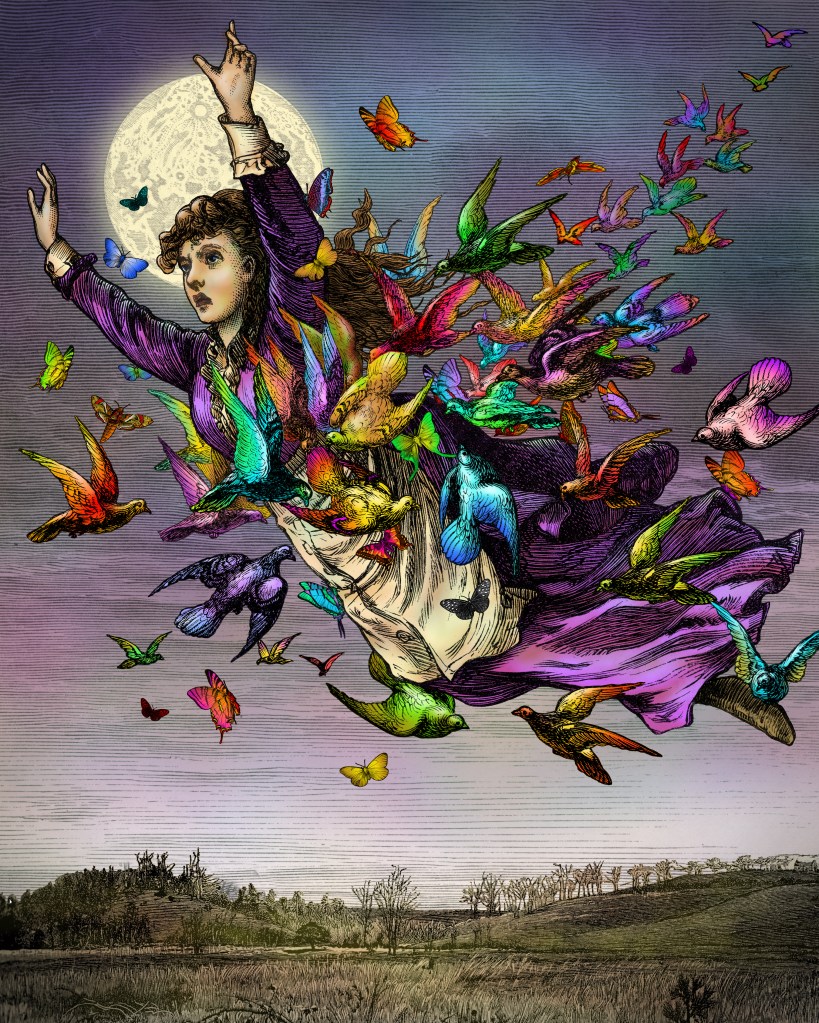
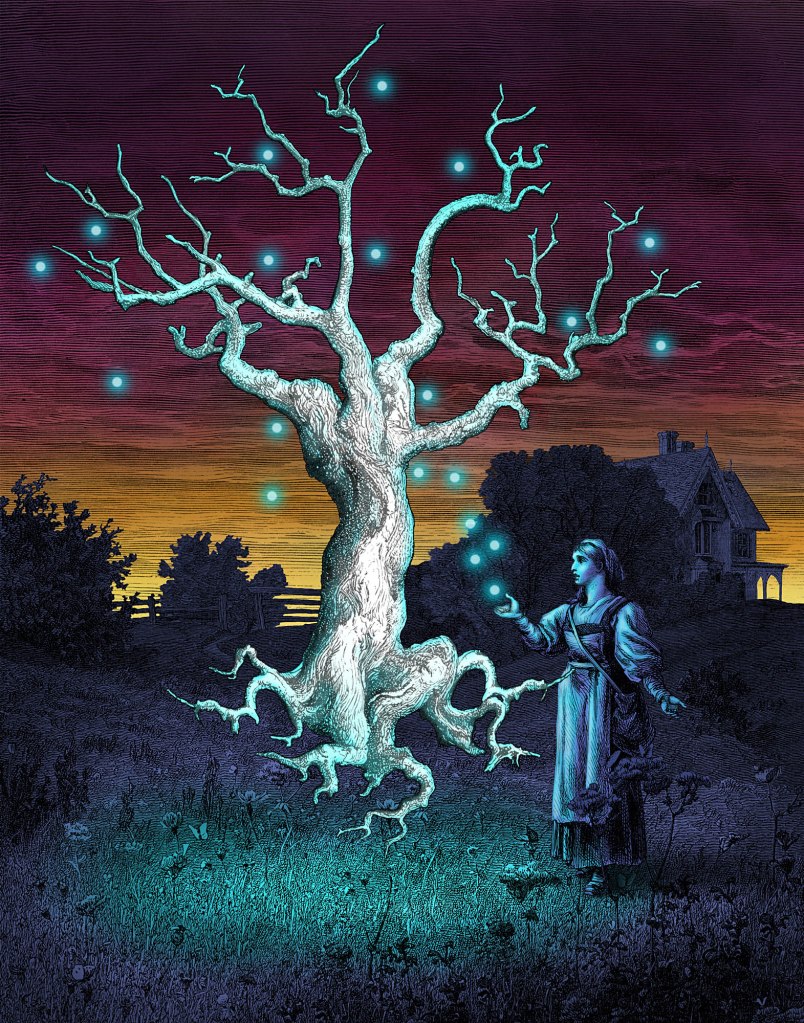
Times do change however, and I am finding myself restless again. In 2022, I discovered AI Imaging, and fell in love. Raw AI elements have been declared Public Domain by the US Copyright Office, but since I am using them as collage elements, it’s just another source of PD elements that I can use in my collages. In fact, my latest major book, The Lost Journals of Phineas Finke, contains many collages using AI elements as illustrations. I even received an official US Copyright certificate naming the illustrations as copyrighted! At first the Copyright examiner told me that all AI images are PD and could not be copyrighted. I wrote back and argued with him that the images in my book are all collages, and that the Copyright Office has a long history of copyrighting collages as art. I finally persuaded him, and he issued me a certificate protecting my collage images as Collective Works. The Lost Journals of Phineas Finke might be the first time that AI images have received an official copyright certification!
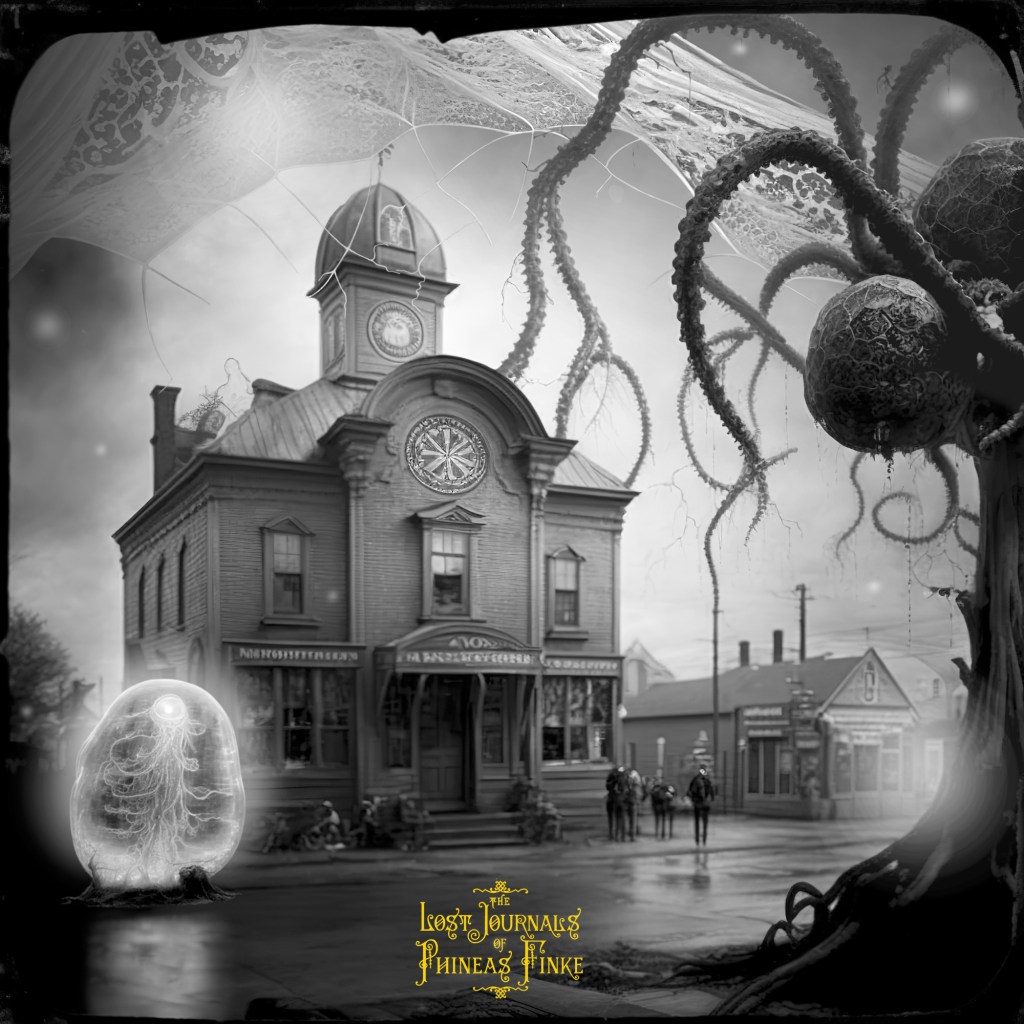
The image above, from The Lost Journals of Phineas Finke, is an example of my AI collage. The store is one element, the foreground creature is another, the glowing orb on the left is another element, and the lace in the sky on top is yet another element. Each element was created separately and collaged together. I also cleaned up the background and did a LOT of retouching, adding reflections on the street and more glowing orbs. I feel that I may continue to use AI to generate my collage elements from now on. Personally, I feel that AI is utterly fascinating, from a purely sci-fi point of view. It will revolutionize art and artmaking, but such are the times we’re living in.
The color images above are all available for sale as prints on Fine Art America. Thanks for reading!
 arTcana
Leave a comment